Guide
Christmas Patterns for Wrapping Paper and Stationery: What Works in 2026
# Christmas Patterns for Wrapping Paper and Stationery: What Works in 2026 The Christmas design season runs on a strange clock. Shoppers start looking in November. Makers and small brands have to decide what their Christmas range looks like around now, in early autumn, months before anyone is thinking about wrapping a present. That gap is the whole problem. Decide too late and you are printing in October at rush rates, into a market that has already made up its mind. Decide too early without checking the direction and you commit to a palette that reads as last year. This guide covers what the 2026 season is actually pointing at, which Christmas motifs hold their value regardless of trend, and how to think about pattern for wrapping paper and stationery specifically, where the constraints are different from decor.
The Season Is Bigger Than Most Makers Assume
It is worth being clear about the size of the opportunity before deciding how much work to put into it.
The National Retail Federation's winter holiday data reported that for the 2025 season, consumers budgeted an average of "$890 for gifts and other seasonal items," with total holiday sales expected to "surpass $1 trillion" and 91 percent of consumers planning to celebrate. Those are United States figures for the most recently reported season, and the direction of travel has been consistent.
The handmade end of that market is not an afterthought. Michaels' 2026 Creativity Trend Report, published in March 2026, names "Gilded Gifting" as one of eight trends for the year, describing handmade pieces given as meaningful, heirloom-quality presents. The same report found analog hobby searches up 136 percent over six months, sewing pattern searches up 152 percent, and needlepoint up 251 percent, alongside the finding that 72 percent of Michaels shoppers had used creative projects to save money in the past year.
The practical read for anyone selling seasonal goods is that the handmade and small-batch gift is not competing with mass retail on price. It is being chosen deliberately, which puts a real premium on how the thing looks.
What the 2026 Palette Is Doing
The clearest change this season is that Christmas colour has moved away from bright primary red and green toward deeper, warmer, more furnished tones.
Christmas Central's 2026 decorating trends names five directions, and the palettes are consistently richer than the traditional scheme. Its leading look is built on "hunter green, navy blue and oxblood red" with aged gold, antique metals and tartan. Its Williamsburg direction is fruit-led, noting "Berries are big news this season" and calling out pomegranates, apples, lemons, pears and clementines, with "jewel tones of the fruits" glowing against greenery. Its Natural Christmas direction runs "sage to basil to greeny blacks" with matte finishes, paper ornaments and natural wood. Against those, its Merry Maximalism look goes the other way entirely into rainbow, neon and iridescent, with candyland, peppermint, gingerbread and circus themes.
That spread is genuinely useful, because it means there are two viable and quite different Christmas ranges available this year: a deep, heritage, oxblood-and-hunter-green direction, and a bright, nostalgic, sweet-shop direction. What has faded is the middle ground of flat postbox red on flat pine green.
The neutral option is also stronger than usual. Pantone's Colour of the Year for 2026 is PANTONE 11-4201 Cloud Dancer, and Pantone's own guidance on using it in products describes it as "a key structural color whose versatility provides scaffolding for the color spectrum, allowing all colors to shine." For packaging it recommends "a refined, pared back aesthetic that makes the product and brand quality the focal point," and notes that "the combination of black with PANTONE 11-4201 Cloud Dancer conveys sophistication and luxury." For a premium wrapping range, an off-white ground with a single deep accent is very much in step with the year.
The Classic Motifs and Why They Persist
Trend palettes change. The motif vocabulary of Christmas barely does, and that is an advantage for anyone building a range meant to sell for more than one season.
Tartan is the most durable of them all, and its Christmas association is more recent and more traceable than most people assume. As the Chicago History Museum costume blog sets out, Queen Victoria and Prince Albert drove the association after building Balmoral Castle in 1853, with Albert designing several tartan patterns for the estate himself. The resulting craze was known as "Balmorality," and was reportedly so popular that tartan was "even being worn as underclothes." The same piece notes the genuinely surprising fact that celebrating Christmas was banned in Scotland for nearly four centuries, from 1640 to 1958, which makes the tartan and Christmas pairing a Victorian invention rather than an ancient tradition.
That matters commercially because tartan is not a trend motif. It has been reliably Christmassy for roughly 170 years, and a well-drawn tartan will sell every December.
The other perennials behave the same way. Holly, ivy, mistletoe and pine hold because they are botanical rather than decorative, which means they scale down to a gift tag without turning to mush. Fruit and berry motifs, currently having a strong year, have the same quality. Stars and simple geometric snowflakes work at any size and read as festive without being literal, a vocabulary we cover more broadly in our celestial patterns guide. Nordic folk motifs, with their flat colour and strict symmetry, are among the most reproducible of all Christmas patterns, and our Scandinavian folk floral guide covers the visual grammar behind them.
Designing for Wrapping Paper Specifically
Wrapping paper has constraints that decor patterns do not, and ignoring them is the most common reason a beautiful design fails as a product.
The pattern gets folded, and folds land anywhere. A design with a strong directional element or a very large motif will be cut in half by a fold on a small gift. Small to medium scale repeats survive giftwrap far better than statement scale.
Most of the design will never be seen at once. A sheet gets wrapped around a box, so the viewer sees perhaps a fifteen centimetre square at a time. The repeat needs to look complete at that size, which is a different test from looking good as a flat sheet.
Ink coverage costs money and changes the feel. A dense dark ground on a large print run is heavier, more expensive, and more prone to cracking on folds than a lighter ground with well-drawn motifs. This is one practical reason the Cloud Dancer style off-white ground is attractive this year beyond simply being fashionable.
Coordination sells better than a single design. Buyers increasingly want a wrap, a tag and a card that clearly belong together. The easiest way to build that is one hero pattern at medium scale, one supporting pattern at small scale, and one plain or near-plain coordinate in an accent colour from the same palette.
For stationery and cards, the calculation shifts again. There the pattern is usually a frame, a liner or a backdrop for type, so it needs to leave room. A design that is gorgeous at full bleed can be unusable behind a message.
Getting the Timing Right
Working backwards from the season is the least glamorous and most valuable part of this.
November and December are when the buying happens, so artwork that is not finished by early autumn is late for anything involving physical printing, sampling and stock. September and October are for having the range designed, proofed and listed, which is exactly why this is worth thinking about now rather than in six weeks.
If you are producing digitally rather than physically, the deadline is softer but the search behaviour is not. Seasonal listings need time to be found, and a Christmas range that goes live in December is competing at the busiest possible moment with no accumulated history.
The other timing advantage of deciding early is that it lets you pick one direction properly rather than hedging. A coherent ten-piece range in a single palette will outperform twenty unrelated designs, because it can be photographed together, sold as a set, and understood in one glance.
Where Patterio Fits
Patterio's seasonal designs are built as seamless repeats at 6144 x 6144 px and 300 DPI, which means one purchase covers wrapping paper, gift tags, card backs, packaging and fabric without the artwork being redrawn or losing quality at print size.
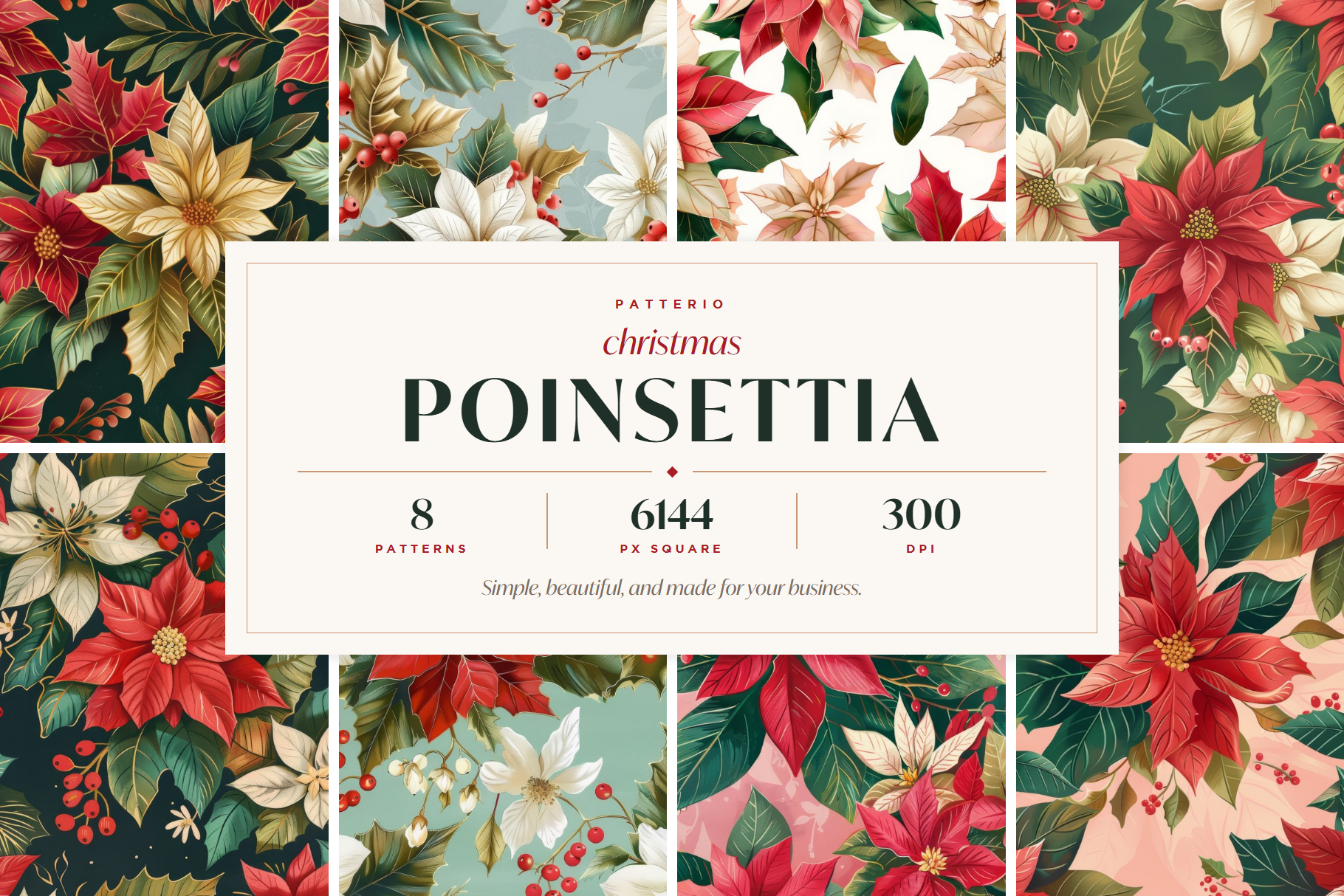
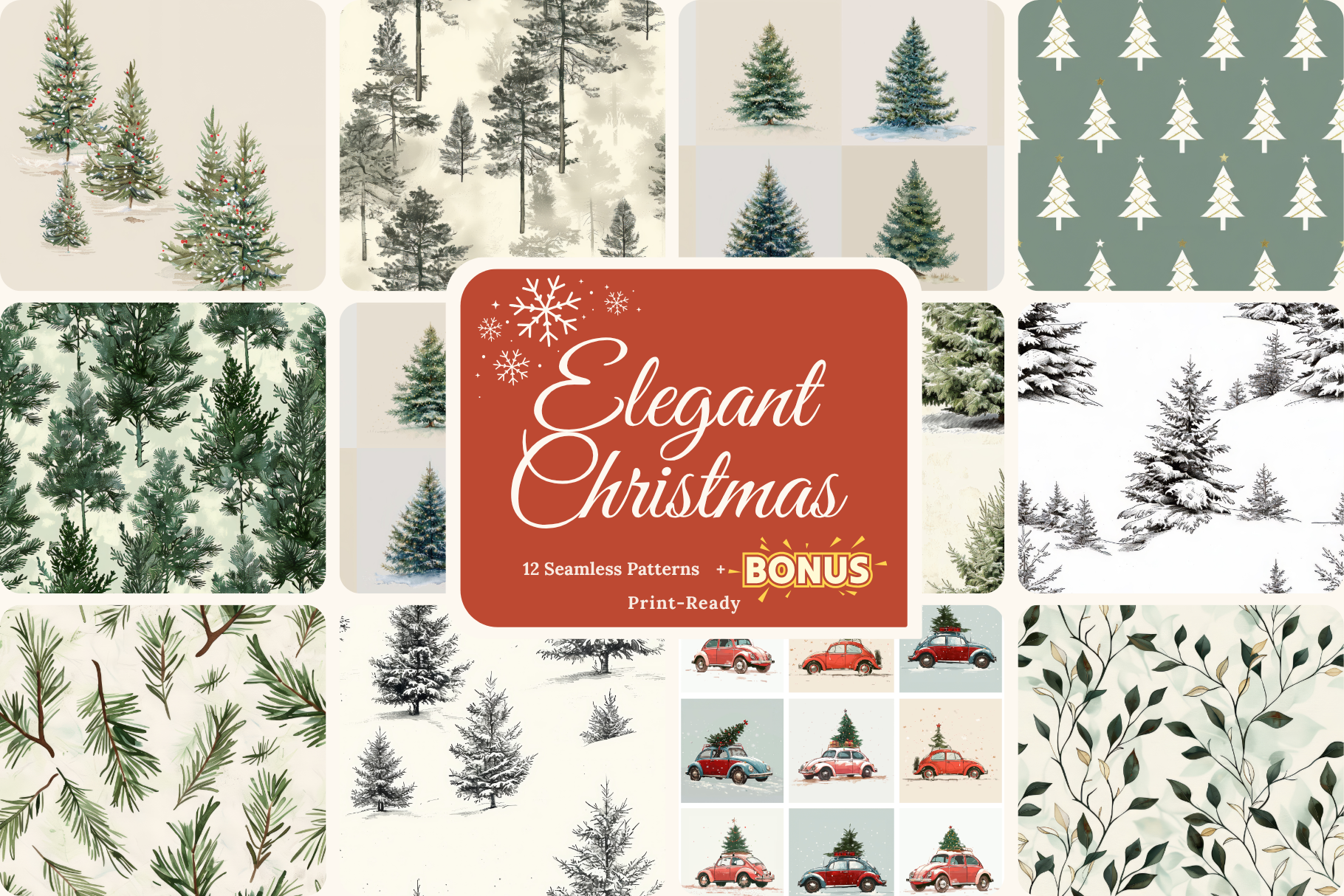
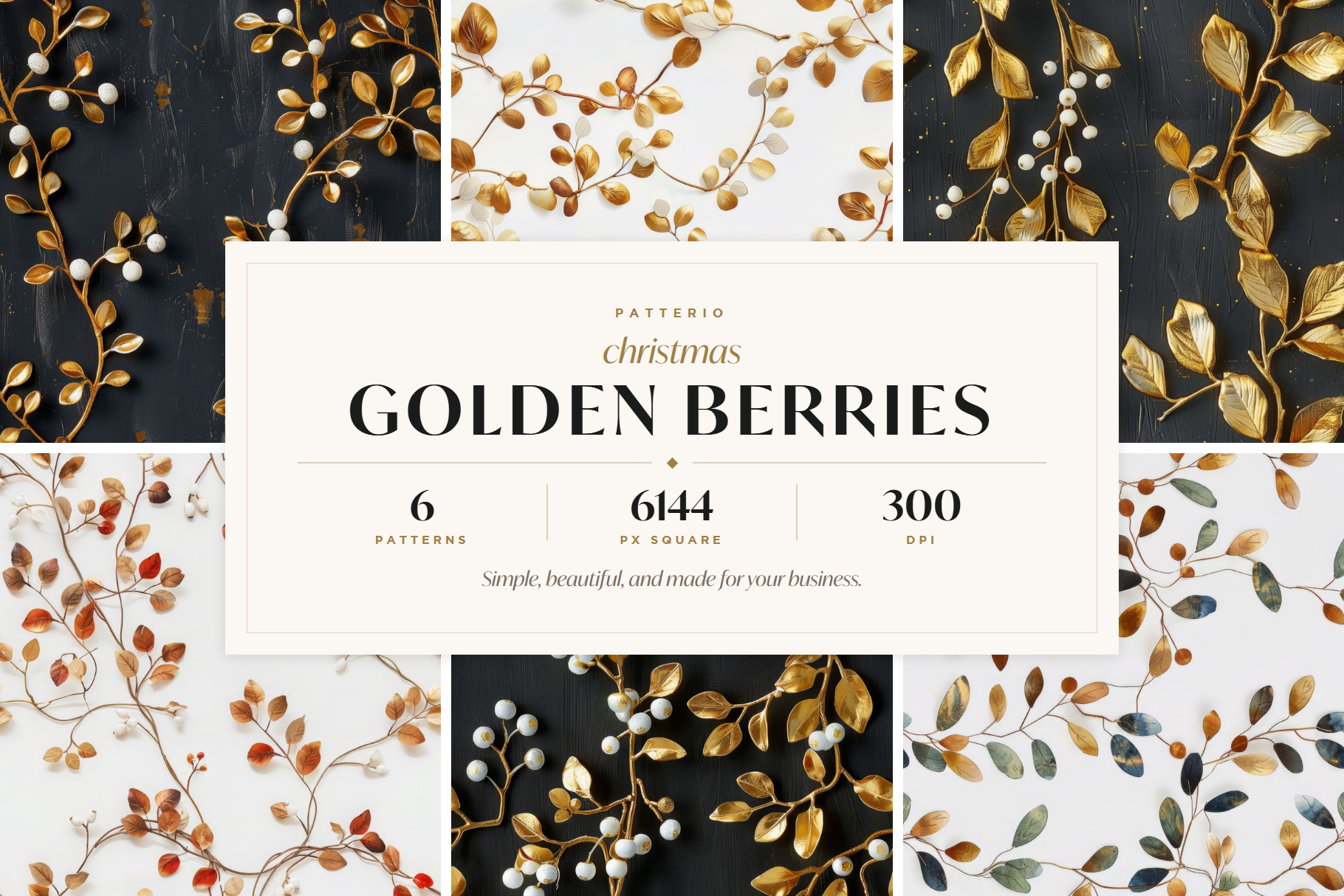
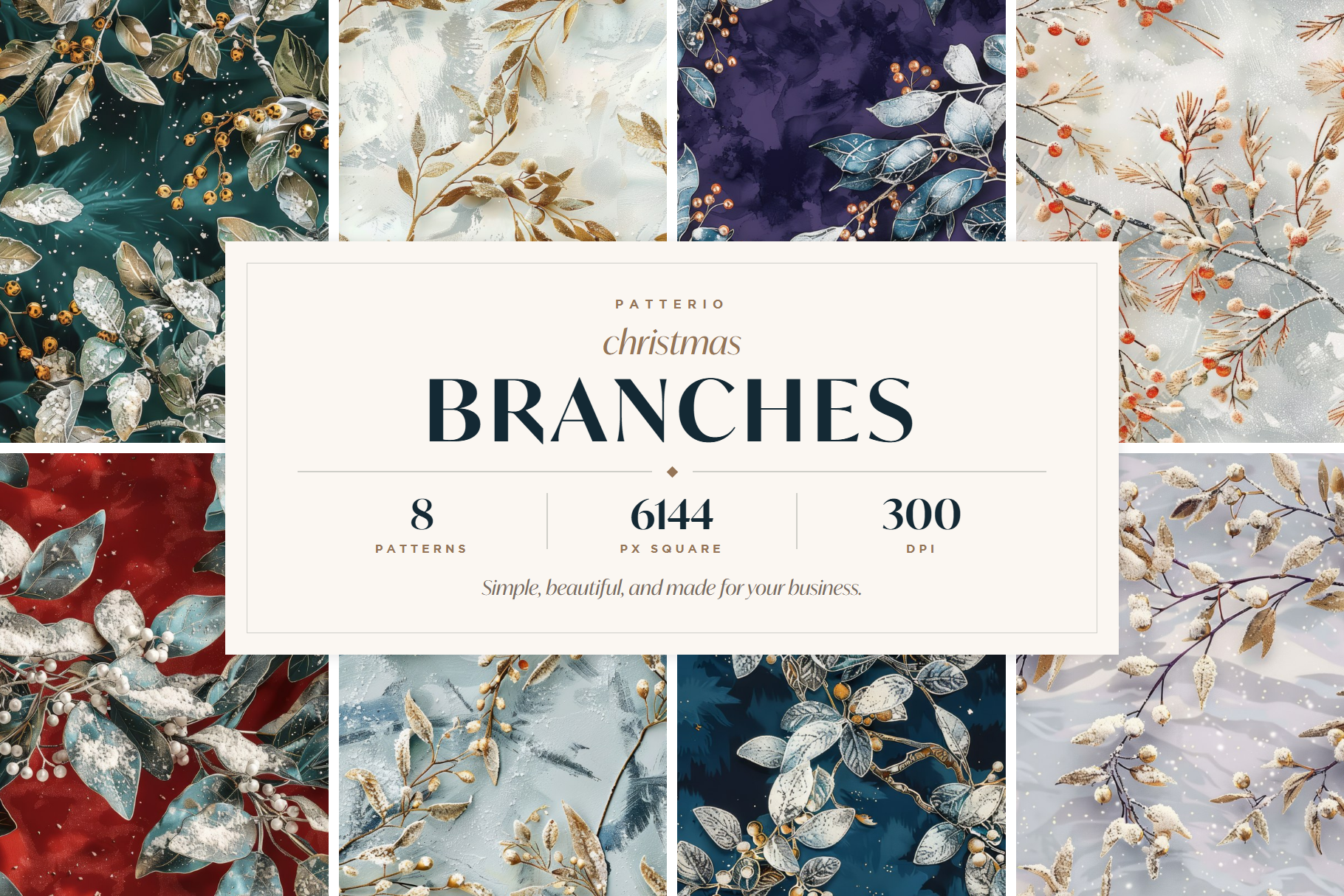
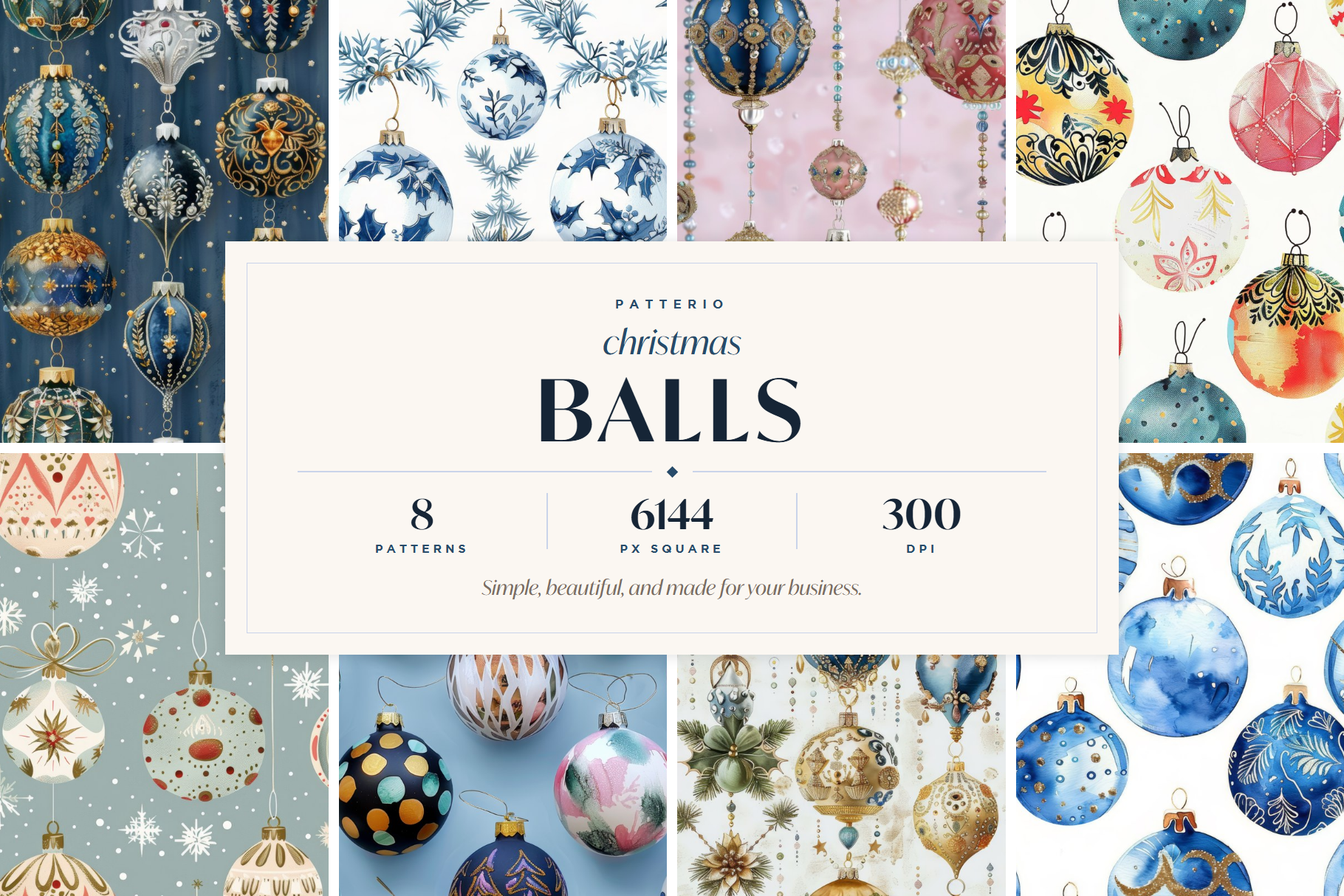
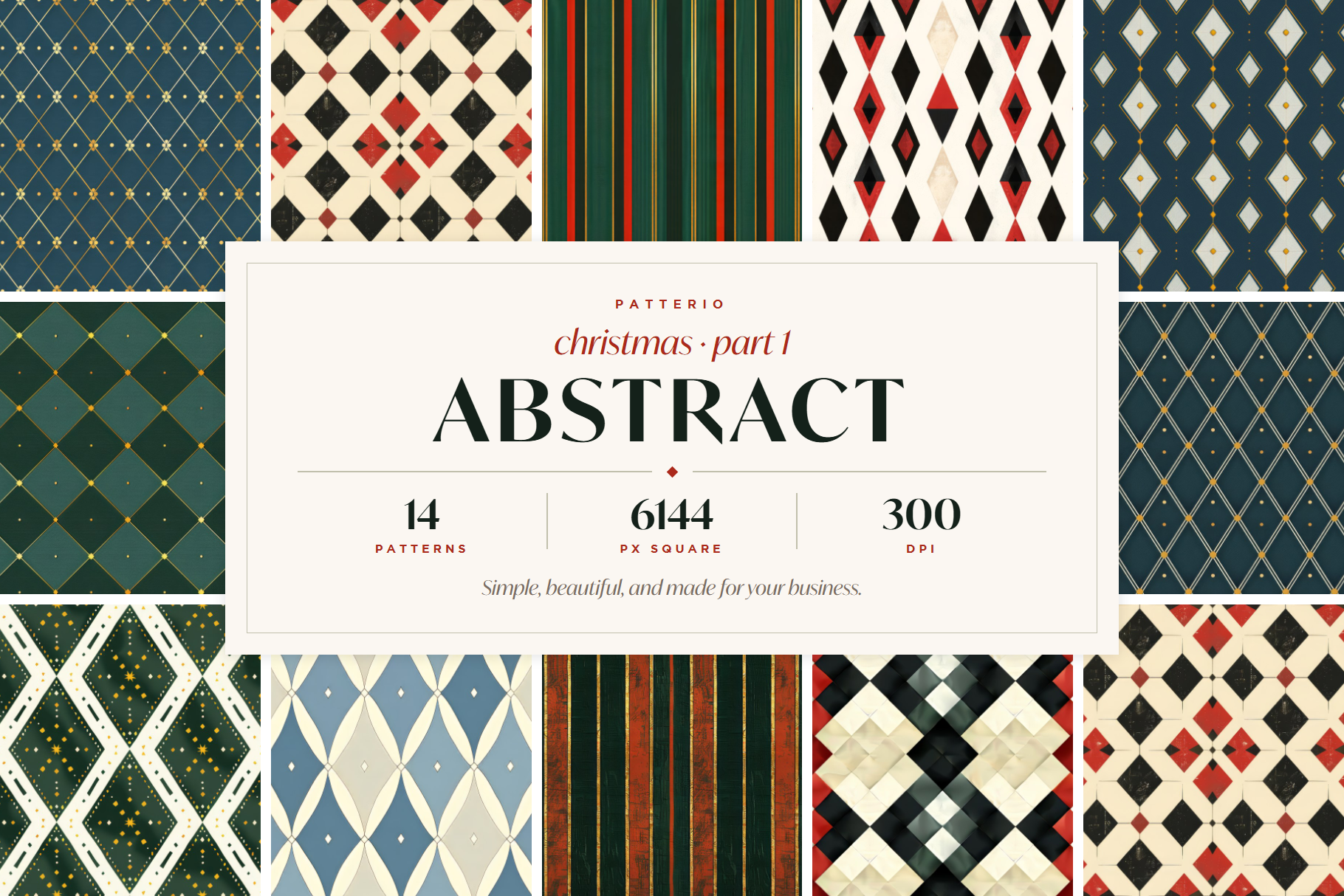
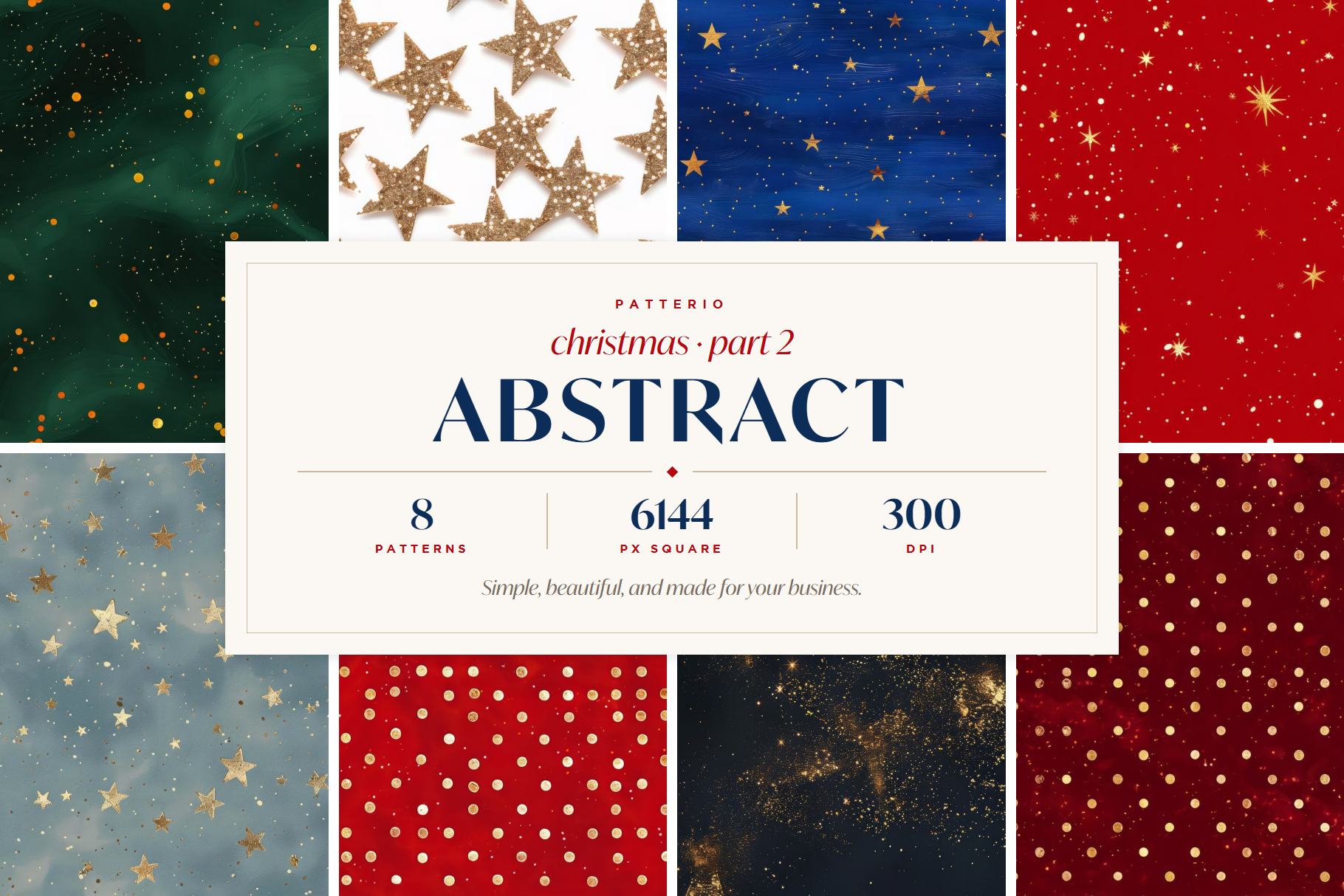
The Christmas collection brings every festive set together. Elegant Christmas and Christmas Branches sit in the deeper, more furnished direction the 2026 forecasts favour, with snowy pines and frosted twigs. Christmas Poinsettia and Christmas Golden Berries carry the classic red, green and gold, while Christmas Balls and the two Christmas Abstract sets (part 1, part 2) cover ornaments, stars and modern geometrics. Each works as a base for a coordinated range rather than a single sheet. For botanical repeats that read as seasonal without being locked to December, the wider shop is worth a look, which is a genuine advantage if you would rather not retire the artwork on the 26th.
If you are selling what you make, our guide to seamless patterns for small business commercial use covers the licensing side, including print-on-demand limits and unit caps. Our covers the packaging application in more depth, and our covers the same coordinated-range thinking for a different season.
The One Decision That Matters
Almost every Christmas range that works is built on a single early choice: which of the year's two directions you are in.
Deep and heritage, meaning oxblood, hunter green, antique gold and tartan, with botanical and fruit motifs and a restrained ground. Or bright and nostalgic, meaning the candy and gingerbread palette, with more colour and more play.
Both are supported by this year's forecasts. What does not work is drifting between them, because the range stops reading as a collection and starts reading as leftovers. Pick the one that suits what you already sell for the other eleven months, and the Christmas range will feel like part of your brand rather than a costume it puts on in December.
Ready to start?
Browse the Christmas collection