Guide
Seamless Patterns for Small Business Commercial Use: A 2026 Licensing Guide
# Seamless Patterns for Small Business Commercial Use: A 2026 Licensing Guide If you run a small product brand, design studio, or print-on-demand shop, seamless patterns are one of the highest-leverage assets you can license. A well-chosen pattern bundle can power an entire season of products, from packaging to fabric to digital paper, for less than a single custom illustration commission. The catch is that the licensing rules around commercial pattern use are inconsistent across marketplaces, often unclear inside a given marketplace, and almost never visible in the product preview that makes you want to buy the pattern in the first place. This guide is for founders, designers, and product creators who want to use seamless patterns commercially without ending up in a license dispute on their first reorder. It covers what the standard license tiers actually mean, how they map to common small-business use cases, the specific traps in print-on-demand licensing, and how to build a pattern library that scales with the business instead of needing to be replaced.
Why Pattern Licensing Confuses Almost Every Small Business
Pattern licensing is harder than it should be for two structural reasons. First, every marketplace defines its own tiers, units, and rights, and the terminology rarely lines up across vendors. "Commercial" on one marketplace can cover up to 5,000 end products, while the same word on another marketplace caps at 250. Second, the language used inside license agreements is written for legal protection, not for the buyer's decision-making, so the practical answer to "can I do X" is often buried three clicks deep in a support FAQ.
Creative Market's own license documentation is one of the clearest in the industry. It defines a Commercial License as allowing the licensed asset to appear in up to 5,000 total end products for sale, and an Extended Commercial License as allowing the asset to appear in up to 250,000 total end products for sale (Creative Market Licenses). Even this clear definition glosses over edge cases like color modification, derivative works, and resale through print-on-demand third parties. Other marketplaces are less explicit, with some basic commercial licenses requiring re-purchase every 250 sales without making that obvious on the product page.
The result is that most small-business buyers default to assuming "Commercial means I can use it commercially," which is rarely the full truth.
The Three License Tiers Most Marketplaces Actually Use
Despite the inconsistency, almost every reputable pattern marketplace organizes its rights into three tiers. Once you know the shape of the structure, comparing across vendors becomes much easier.
**Personal license.** Covers non-commercial use only. This is the right tier if you are designing your own wedding invitations, decorating your own home, or creating something for a friend without selling it. It does not cover anything you sell, rent, or use to promote a paid product or service, even on a small scale.
**Standard Commercial license.** Covers commercial use up to a defined unit cap, usually 250 to 5,000 final products per pattern depending on the marketplace. This is the right tier for a launch SKU, a small-batch product run, a limited seasonal collection, or any commercial use where you can confidently estimate the final volume.
**Extended Commercial license.** Covers higher production volumes, often up to 250,000 final products per pattern, and frequently extends to use cases the standard tier excludes such as print-on-demand on third-party platforms, large-scale fabric runs, or wholesale distribution (Creative Market Extended Commercial License FAQ). This is the right tier for permanent product lines, established brands scaling beyond a launch, or any pattern that anchors a product the brand expects to reorder many times.
Picking the right tier upfront is the single most important license decision you will make. Upgrading later is possible but usually more expensive than buying the right tier the first time, and any production already shipped under the wrong tier may need to be retroactively relicensed.
What "Commercial Use" Actually Includes
The phrase "commercial use" hides several specific rights. Before you license, confirm the agreement covers each of the following that applies to your business.
**End product for sale.** Almost every Commercial license covers this in some form, but the definition of "end product" matters. Creative Market specifies that for seamless patterns used to create fabric for sale, the resulting fabric must be "significantly different than the original pattern, require time, effort, and skill to produce, and not derive its primary value from the pattern itself." If you want to sell fabric with the pattern used as-is, you need an Extended Commercial license (Creative Market Pattern Use). The same logic applies to gift wrap, wallpaper, and any product whose primary value comes from the pattern.
**Print on demand.** Many standard Commercial licenses exclude print-on-demand platforms entirely. Creative Fabrica's overview of POD licensing notes that POD often requires either an explicit POD license tier or an extended commercial agreement, depending on the marketplace (Creative Fabrica). If you sell on Spoonflower, Society6, Redbubble, Printful, Printify, or any similar platform, check the POD clause specifically before purchasing.
**Digital products.** Some licenses allow physical end products but explicitly exclude digital products like templates, presets, downloadable assets, or stock content. If you sell on Etsy, Creative Market, or any platform where buyers download files, confirm digital resale is covered.
**Client work.** Most Commercial licenses cover use in client deliverables, but the rights typically transfer at the project level rather than the asset level, meaning the client cannot then reuse the pattern in unrelated projects. If you are a designer producing work for a client, document which assets are licensed under your account and which transfer with the project.
**Advertising and marketing.** Use of the pattern in your own marketing (website, social media, ads) is almost always included in Commercial. Use of the pattern in advertising for a third party is sometimes restricted.
Print on Demand Is the Riskiest License Category
Print-on-demand is the fastest-growing channel for small product brands, and also the category where pattern licensing most commonly goes sideways. Printify's 2026 guide to launching a print-on-demand business positions it as one of the most accessible product launch routes available, with no inventory and very low startup cost (Printify). What the guide does not emphasize is that almost every commercially viable POD pattern needs its license carefully matched to the platform.
Two questions tell you whether your license covers POD. First, does the license explicitly mention print on demand, third-party fulfillment, or named platforms like Spoonflower, Society6, Redbubble, Printful, or Printify? If yes, follow that language exactly. If no, you should assume POD is not covered. Second, does the license language reference "end products for sale" in a way that includes products you do not physically manufacture? Some licenses define the licensee as the manufacturer, which technically excludes POD where the platform manufactures on your behalf.
When in doubt, contact the pattern marketplace directly and ask in writing. The few minutes it takes to confirm is much cheaper than a takedown request from a designer who finds your pattern on a POD platform without the right license tier.
Matching the License Tier to Your Business Size
The right license tier depends on where your business sits today and where you expect it to be in 12 to 18 months. A useful framework is to pick the tier that comfortably covers the higher of those two volumes, not the lower.
For a brand new business in concept or pre-launch phase, a Personal license is often the right starting point if you are only mocking up designs to validate concepts. Switch to Commercial before the first paid sale.
For a small business launching one or two SKUs at small batch volume, a standard Commercial license is usually correct. Confirm the unit cap matches your launch volume with at least a 2x cushion for restocks.
For a small business with an existing product line, multiple SKUs, or planned wholesale expansion, Extended Commercial is almost always the right tier from the start. The price premium over standard Commercial is typically much smaller than the cost of having to upgrade later, and the rights almost always include the print-on-demand and high-volume use cases that growing businesses run into within the first year.
For a design studio or freelancer producing work for multiple clients, Extended Commercial under your own account often makes more sense than per-project licensing, because it removes the per-deliverable license overhead and lets you reuse a pattern library across briefs.
Red Flags to Watch For in Pattern Licenses
Several common license clauses are worth checking carefully before you commit to a pattern bundle for commercial use.
**Unit caps that reset on each design.** Some marketplaces structure their commercial license per design rather than per license, meaning a 250-unit cap applies to each individual pattern. If you are building a coordinated brand identity around six patterns from one bundle, you may unintentionally be working with six separate 250-unit caps that each need to be tracked.
**Re-licensing requirements.** A small number of marketplaces require re-licensing after a defined number of sales. Skyy Designs, for example, structures its basic commercial license per design, covering 250 to 500 products and requiring re-purchase every 250 sales (Skyy Designs Commercial Licensing). This can be appropriate for low-volume craft sellers and disastrous for any business with rapid growth.
**Exclusion of digital resale.** Many otherwise-broad commercial licenses explicitly exclude reselling the pattern as a digital file, including inside templates, mockups, or downloadable assets. If your business model includes any digital deliverable, confirm this is covered.
**Geographic limitations.** Less common but worth checking, especially with smaller marketplaces. Some licenses are technically limited to a single country or region.
**Time-bound licenses.** Some commercial licenses are issued for a defined period (often one year) rather than perpetually. The cap on usage may reset each year, but it also means the license requires renewal to keep the original products on the market.
Building a Pattern Library That Scales
The brands that get the most leverage out of seamless patterns treat their license collection as a strategic asset rather than a per-project purchase. Two habits make this work.
The first is sourcing in coordinated bundles rather than single patterns. A bundle of 6 to 30 coordinating designs in a shared palette can power a whole season of products across packaging, fabric, gift wrap, digital paper, and marketing assets. The per-pattern cost is much lower than buying singles, and the visual coherence across SKUs is the thing customers actually feel.
The second is documenting licenses centrally. A simple spreadsheet that tracks pattern name, source marketplace, license tier, purchase date, and current sales volume against the unit cap takes 10 minutes to set up and saves significant friction down the line. It also catches situations where a pattern is approaching its cap and needs to be upgraded before a reorder.
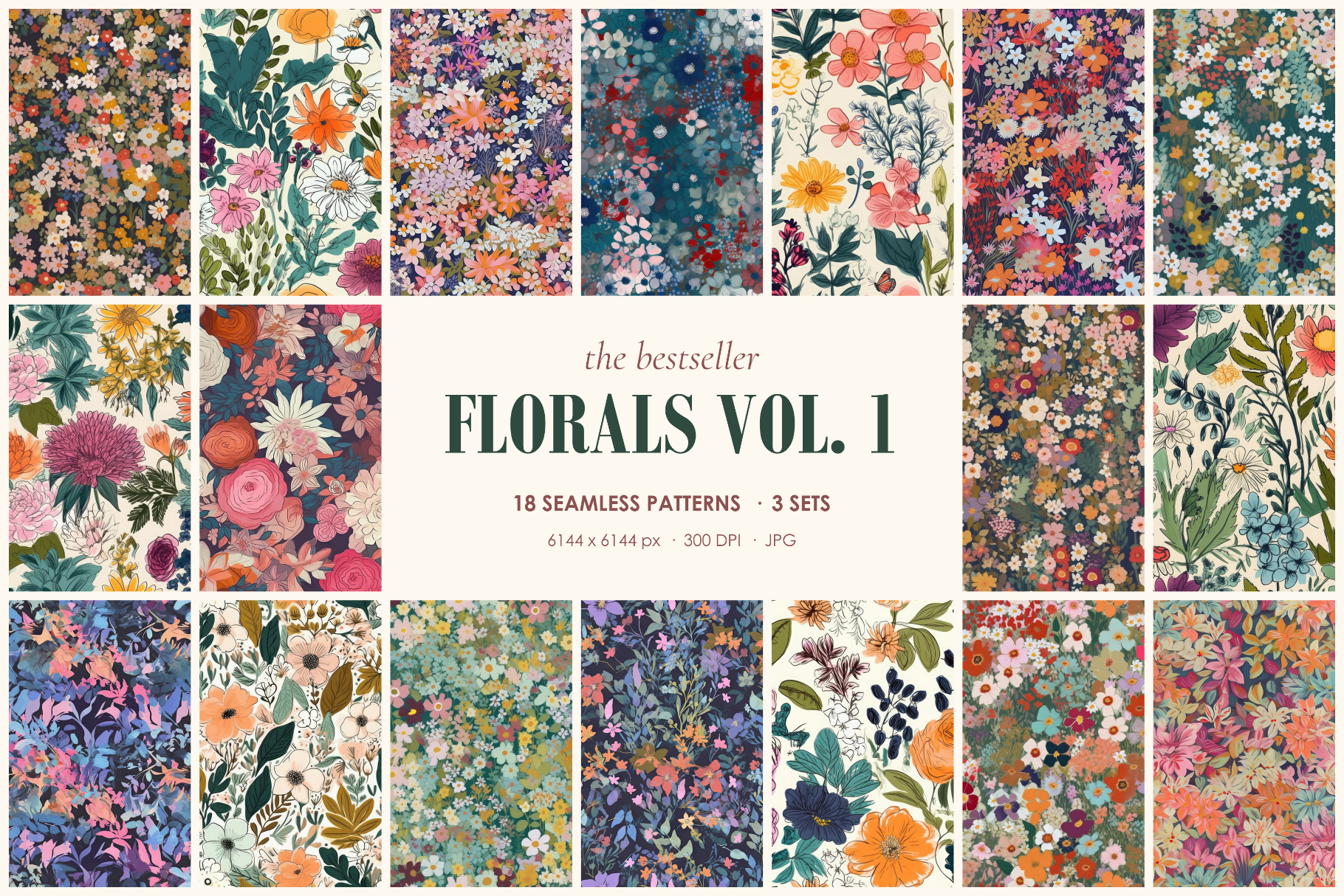
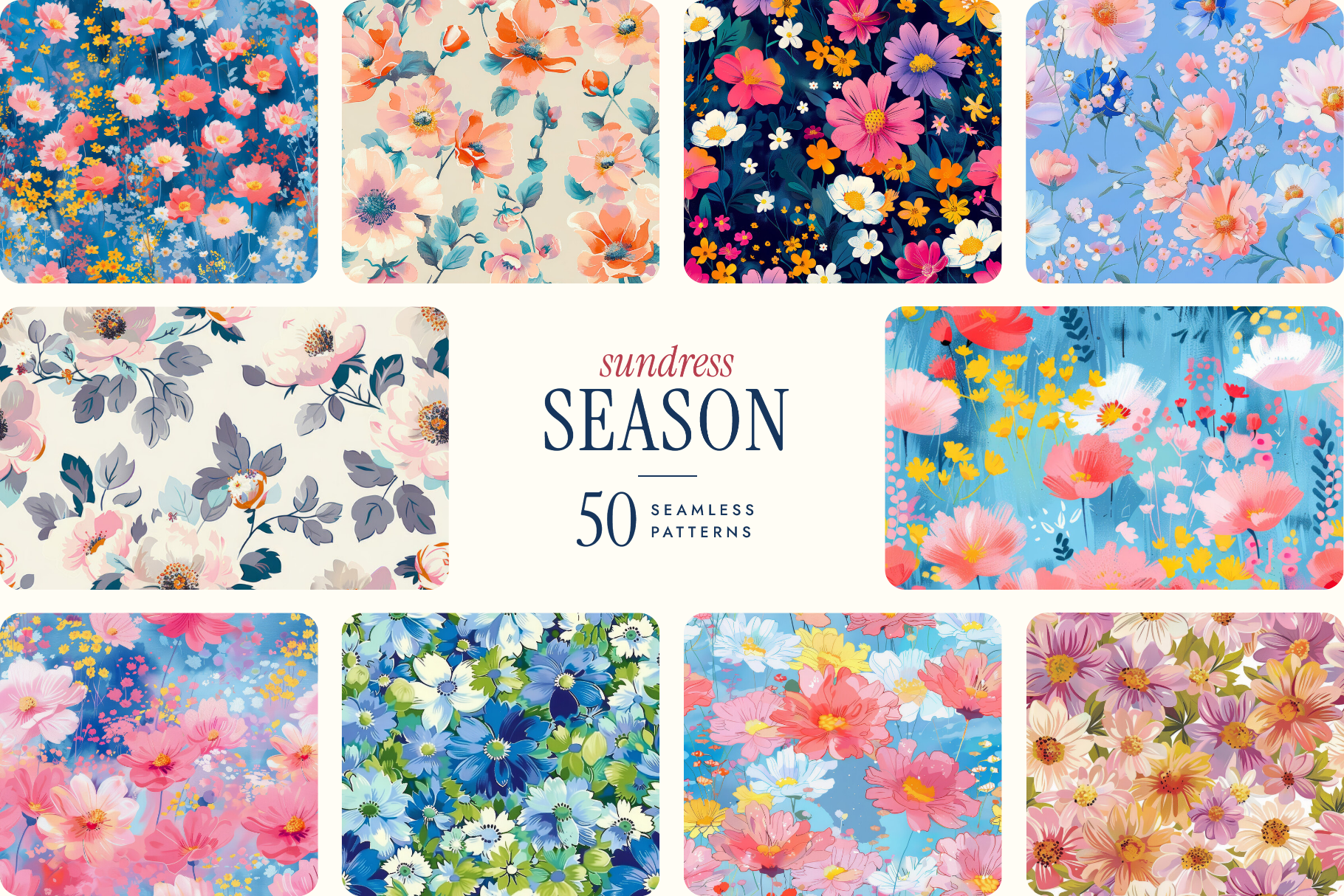
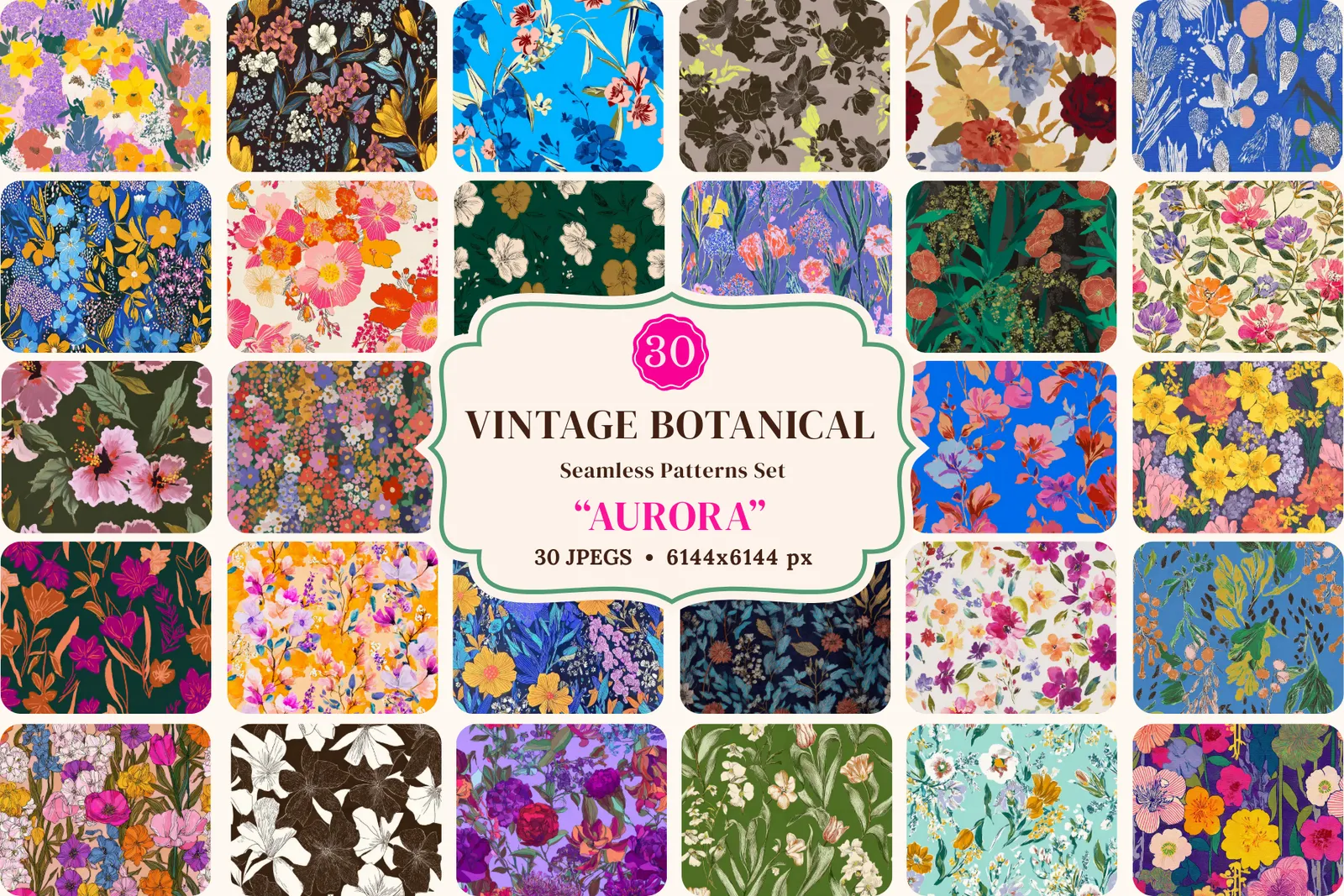
If you are looking for a starting point built for this kind of scaled commercial use, the Patterio shop is organized around bundles of 6 to 50 coordinating designs, licensed in Personal, Commercial (up to 500 units), and Extended (up to 250,000 units) tiers. The Extended tier explicitly covers print-on-demand and high-volume production, which removes the most common small-business licensing trap upfront. For broader context on how these patterns get used across categories, our vintage botanical pattern wallpaper guide and botanical patterns for product packaging guide walk through specific applications.
Quick Answers for Small Business Pattern Licensing
**What is the difference between Commercial and Extended Commercial?** Commercial typically covers small-to-medium production runs (250 to 5,000 final products per pattern depending on marketplace), while Extended covers high-volume production (often up to 250,000) and frequently includes print-on-demand rights that Commercial excludes.
**Do I need a separate license for each product I make with the pattern?** Usually not. A standard Commercial license typically allows the pattern to appear in multiple SKUs as long as total units sold stays under the cap.
**Can I modify the colors of a licensed pattern?** Most Commercial licenses allow color modification. Most do not allow you to extract individual motifs and create new patterns from them. Read the license language for "derivative works" specifically.
**Are POD platforms always covered by Commercial licenses?** No. Many standard Commercial licenses exclude print-on-demand. If you sell on Spoonflower, Society6, Redbubble, Printful, or Printify, confirm POD is explicitly covered before purchase.
**What happens if I exceed the unit cap on my license?** You should upgrade to a higher tier before that happens. Marketplaces generally allow upgrades but often require purchase of the higher tier rather than a discounted top-up.
**Can I use a pattern in client work?** Most Commercial licenses cover client work. The license usually stays with you rather than transferring to the client, meaning the client cannot reuse the pattern outside the specific project.
Licensing Is the Cheapest Part of the Decision
The cost of upgrading a license is almost always smaller than the cost of having to swap patterns mid-project, relicense retroactively, or rebrand a product line because the original license stopped covering the use case. The brands that treat pattern licensing as a five-minute decision at purchase time usually pay for that haste later. The brands that read the license terms once and pick the right tier upfront almost never think about licensing again.
If you are ready to license patterns for your next product line, the Patterio shop is structured around clear three-tier pricing (Personal, Commercial up to 500 units, Extended up to 250,000 units) so the right tier for your business is obvious at purchase. For specific use-case guidance, the botanical patterns for product packaging guide covers the apothecary aesthetic and how to choose pattern bundles for small-brand packaging.
Sources cited: 1. Creative Market, Licenses FAQ 2. Creative Market Support, Extended Commercial License FAQ 3. Creative Market Support, Graphics in End Products for Sale 4. Creative Fabrica, Print on Demand Licenses: an Overview 5. Printify, How to Start a Print-on-Demand Business in 2026
Ready to start?
Browse seamless pattern bundles